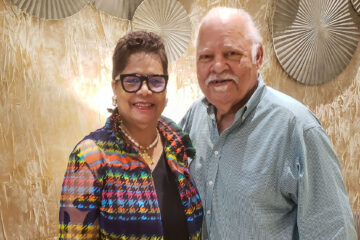
Some legacies are built in boardrooms. Others are built in kitchens. The legacy of the Chase family was built in both seasoned with faith, stirred with sacrifice, and served with an open door to anyone who walked through it. For over eight decades, Dooky Chase’s Restaurant on Orleans Avenue has stood not merely as a place to eat, but as proof that one family’s refusal to be diminished could nourish an entire city’s soul.
Stella Chase did not set out to be a keeper of that flame. She was a teacher who had built her own life away from the hum of the kitchen. But legacy has a way of calling you home. When she returned to take her place beside her parents, she brought with her something the restaurant had always run on: quiet strength, deep faith, and an unwavering belief that food, at its highest purpose, is an act of love.
Today, with five generations working side by side and two major national honors to their name, the story of Dooky Chase’s is no longer just a New Orleans story. It belongs to the world. And at the center of it all stands Stella Chase, steady, gracious, and absolutely certain that the best is still to come.
Somewhere between Hawaii and Australia, where the Pacific stretches so wide it seems to forget the rest of the world exists, nine slivers of coral rise barely above the waterline. This is Tuvalu, a nation so slender in places that a person standing at its centre can watch the ocean break on one side and the lagoon lie still as glass on the other, all within the same unhurried glance. There are no towering resorts here, no beach bars competing for attention, no queues forming for the next attraction. What Tuvalu offers instead is something increasingly rare in modern travel, an honest and unpolished window into Pacific island life, lived exactly as it has been for generations.
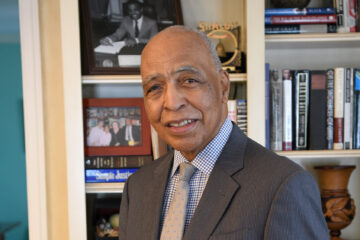
Jerry Prejean’s journey from a tight-knit community in Lafayette to becoming Acadiana Market President at First Horizon Bank is a testament to hard work, mentorship, and dedication to service. With a career spanning over 30 years in banking, he has played a pivotal role in economic development, financial literacy, and youth mentorship. His legacy is not just in finance but in bridging communities, fostering opportunities, and inspiring the next generation of leaders.
Jerry Prejean’s journey from a tight-knit community in Lafayette to becoming Acadiana Market President at First Horizon Bank is a testament to hard work, mentorship, and dedication to service. With a career spanning over 30 years in banking, he has played a pivotal role in economic development, financial literacy, and youth mentorship. His legacy is not just in finance but in bridging communities, fostering opportunities, and inspiring the next generation of leaders.
A Montréal musician with Acadian roots, Benoît LeBlanc spent decades tracking Kouri-Vini songs from dusty archives to studio takes—bridging Congo Square rhythms, Creole satire, and early jazz into a living language you can hear.
Founder of the Living Legends Program and Pride Plaza, Dr. Ernest W. Kinchen Jr. is a pioneer whose impact goes beyond medicine—uplifting generations through education, opportunity, and pride.
From the cotton fields of Mallet to the courtroom of Opelousas, Judge Charles Cravins has lived a life shaped by resilience, faith, and a deep commitment to justice.
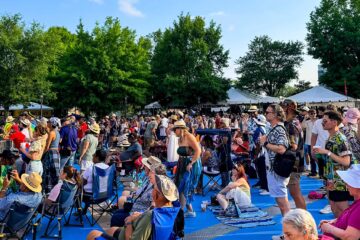
Rain could not stop the music at the New Orleans Jazz & Heritage Festival.
From world-renowned performers to unforgettable moments of community spirit, Jazz Fest once again demonstrated why it remains one of the most important cultural celebrations in America. Kreol Magazine looks back at a festival where music, tradition, and resilience took centre stage.
There are festivals that fill a calendar, and there are festivals that fill a city. Festival International de Louisiane belongs to the second kind. For five days every April, Downtown Lafayette stops behaving like a Louisiana town of modest size and starts behaving like a crossroads of the world, with a Malian guitar line drifting past a crawfish stand and a Belgian stilt walker weaving through a crowd that speaks a dozen languages before lunch.
This year the festival turned forty, and Kreol Magazine travelled to Acadiana to see what four decades of that idea looks like in practice. What we found was not simply a music festival with good food attached. We found a working demonstration of something this magazine has spent its life arguing for, that Creole culture, Cajun culture, and the wider Francophone world are not separate rooms to be visited one at a time, but a single table everyone is welcome to sit at together.
A festival with no ticket booth and no closed doors, built entirely on the belief that joy shared is joy multiplied.
What follows is our account of those five days on Jefferson Street. The music that carried across continents in a single afternoon. The food that turned a city block into a communal table. The strangers who, by the second evening, were no longer strangers at all. And the quiet, considerable achievement of a small Louisiana city that has spent forty years proving the world is always better when it shows up together.
Every spring, the New Orleans Jazz & Heritage Festival brings together music, culture, and community in a celebration rooted in tradition and alive with new sound. The 2026 edition blends legendary performers with today’s leading voices, offering a living portrait of a city where music is identity.
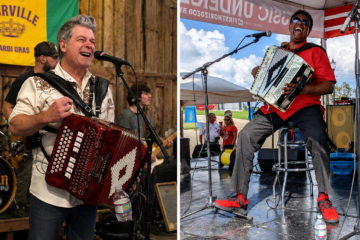
Preston Frank, a fourth-generation Zydeco musician, has dedicated his life to preserving and evolving the rich traditions of his Creole heritage. Through his music, he has connected generations within his family and among his diverse audiences, ensuring the vibrant rhythms of Zydeco endure.
Poncho and Rellis Chavis, sons of Zydeco legend Boozoo Chavis, are dedicated to preserving their father’s musical legacy and the rich traditions of Creole culture.
Working primarily in oil on large canvases, the British artist blends human figures with lush foliage and flowers, creating visually captivating and quietly reflective works.
For artist Bindu Morjaria, creativity has always been more than a skill—it is a way of seeing the world, processing life’s challenges, and inspiring others.
Some buildings ask to be admired. St George’s Hall asks something harder. It asks you to stop, to look up, and to understand what a city believes about itself when it decides to build something that will outlast everything it knows. Liverpool was the second port of an empire, and that empire’s wealth moved through these docks in every direction, including ships that carried enslaved people across the Atlantic long before the Hall’s first stone was laid. Later, nine million more would pass through by choice, carrying music, faith, and memory from Ireland, West Africa, China, and the Caribbean, and some of it never left. This is the story of the building Liverpool raised to hold that weight, and of the Creole city it became without ever using the word.
They called it lost. But Benin was never gone.
For centuries before the first European ship anchored off its coast, the Kingdom of Benin was one of the most powerful and sophisticated civilisations on earth. Its capital was a city of wide straight roads, royal bronze, sacred ivory, and walls that stretched further than the eye could follow. Its Oba was divine. Its artisans were the finest in the region. Its merchants traded with the world.
Then came 1897. A British naval expedition invaded, burned the royal palace, exiled the king, and carried off thousands of artworks that would spend the next century in foreign museums. In the aftermath, colonial writers reached for a convenient word. They called Benin lost.
It was never lost. It was taken. And now, slowly, it is coming back.
Congo’s contribution to world culture is often told through its music, the irresistible pulse of rumba, the electric energy of soukous, the legends of Papa Wemba and Koffi Olomidé. Yet there is another story, equally powerful and deeply Creole in spirit: fashion.
The Bahamas, an archipelago of almost 700 islands and cays north of Cuba, stretches over 800 km between Grand Bahama Island and Great Inagua Island. The thriving Creole community has grown due to the islands’ unique position at the gateway to the Caribbean Sea, the Gulf of Mexico, and the Central American region.
Across Creole communities, music has always been more than entertainment. It is memory, resistance, celebration, and language in motion. From Louisiana to the Indian Ocean, Creole survives most powerfully when it is sung, drummed, and danced. This article explores how music became the safest and strongest home for Creole languages worldwide.
In global affairs, small island nations are often portrayed as bystanders, too small to influence the tides of history. Yet Creole nations, from the Indian Ocean to the Caribbean, hold a significance that belies their size.
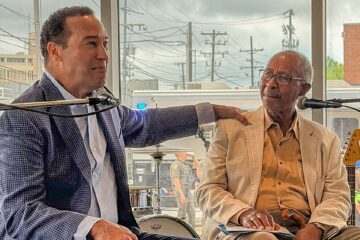
At 10:00 a.m. on 25 April, First Horizon Bank opened its doors to a morning filled with warmth, music, conversation, and celebration as International Kreol Magazine launched Issue 43 ahead of Festival International. What began as a magazine launch quickly became something much larger: a joyful gathering of community, culture, memory, and pride.
At the centre of the celebration was Jerry Prejean, whose life story and portrait on the front cover gave Issue 43 its powerful emotional heart. Guests arrived not only to honour Jerry, but to celebrate the stories, people, and traditions that continue to shape Louisiana’s Creole and cultural identity.
With opening words from Georgina Dhillon, Editor and Publisher of International Kreol Magazine, followed by a live discussion with Jerry Prejean, music entertainment, and brunch, the morning unfolded with laughter, reflection, and genuine connection. Copies of Issue 43 moved from table to table, sparking conversations and memories as guests turned the pages.
This was more than the launch of a magazine. It was a reminder that every community has stories worth preserving, and every issue of Kreol Magazine helps keep those stories alive.
An afternoon bringing together featured voices, cultural leaders, and community supporters to honor storytelling, heritage, and shared cultural legacy. The gathering reflected the spirit of Kreol Magazine: rooted in history, shaped by people, and carried forward through community.
Since its humble beginnings in 1987, Festival International de Louisiane has blossomed into a world-class event that showcases a diverse lineup of artists from over 25 countries.